


Diploma in Information Technology

Course Qualification
Diploma

Study Period
8 Months

Study Mode
Full Time

Intakes
April, August, December

Estimate Fee
RM43,500
Course Overview
Building Blocks of Software and Databases
This programme introduces learners to basic software development concepts. Students start with basic coding structures using languages like Java or Python to solve logical issues. They learn how computer programs think, manage data, and display results. Beyond standalone programs, students discover how databases work. They write structured query language (SQL) commands to create tables, search for specific data, and build data storage systems for modern mobile apps and websites.
Networking Essentials and System Logic
Students explore the digital mechanics that connect computers across the globe. The lessons cover how data travel securely through networks and routers. Learners study system architecture to understand how operating systems manage memory, hardware components, and background programs. Practical classroom sessions involve troubleshooting broken network lines and mapping out network setups on paper. This helps students visualise how data move safely across corporate servers.
Practical Coding Tasks and Assignments
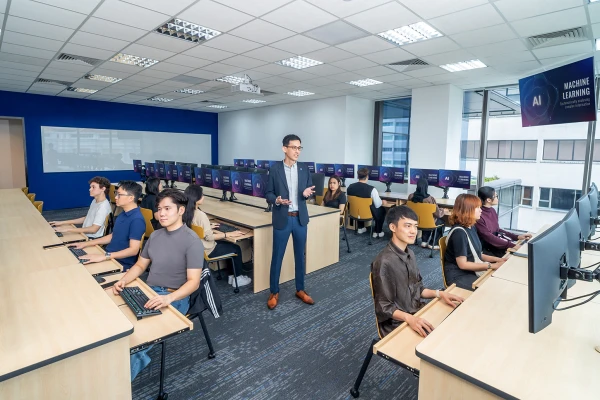
The learning structure replaces long theoretical lectures with practical computer lab activities. Students spend their class hours reading code, finding syntax errors, and fixing logic bugs on their computer screens. Projects mimic actual technology issues, such as building a basic inventory registry or designing a safe login page. Most modules use individual programming assignments and group project portfolios rather than heavy final exams. This structure builds strong confidence for students before progressing onto degree pathways with partner universities listed on the main Kaplan Singapore platform.
Future Computing Career Pathways
Completing this course provides a direct stepping stone into entry-level positions within the technology sector. Graduates can work as technical support engineers, database assistants, junior web developers, or systems administrators. Most students choose to use this qualification to skip introductory university modules and enter directly into the second year of a bachelor's degree program in cybersecurity, computer science, or network engineering.
Entry Requirements
Review the academic qualifications, grades, and additional criteria needed for admission to this program.

SPM
Minimum 5 credits including Mathematics (C) & English (C)


STPM
Minimum CGPA 3.00 including Mathematics T (C)


DIPLOMA
Minimum CGPA 3.00 including Mathematics T (C)


A-LEVEL
Minimum CGPA 3.00 including Mathematics T (C)


O-LEVEL
Minimum CGPA 3.00 including Mathematics T (C)
ADDITIONAL REQUIREMENTS
- MUET Band 3 or above
- IELTS Overall 6.0 or above
- Has at least one industry level certification in Engineering
Entry Requirement
About this School

















Other Courses from This University
Explore all diploma, degree, and postgraduate programs available at this institution.
Courses You Might Be Interested
Explore similar diploma, degree, and postgraduate programs that you matches your interest.