



Bachelor of Youth and Community Leadership

Course Qualification
Degree

Study Period
3 Years

Study Mode
Full Time

Intakes
July, February

Estimate Fee
RM312,621
Course Overview
Leading Social Change through Practical Action
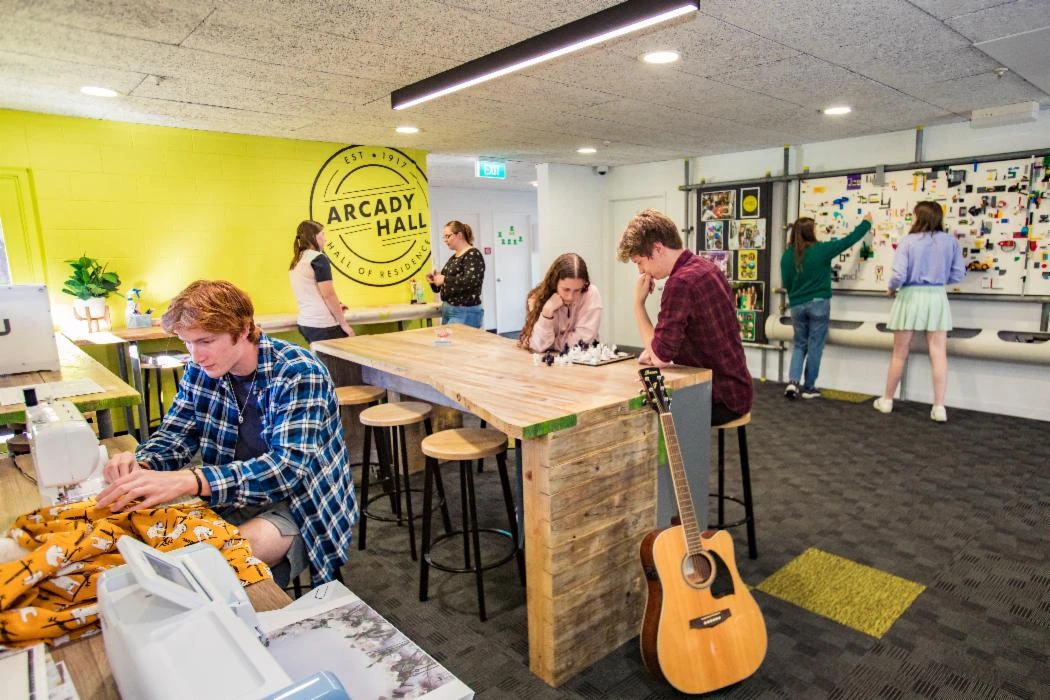
In this program, you won't just study leadership—you will practice it. The Bachelor of Youth and Community Leadership focuses on real-world social action, building on the university’s reputation for student-led initiatives. Your daily learning involves a mix of attending seminars on globalisation and social justice and working on projects that address local or global challenges. This active learning style means you spend less time memorising theories and more time brainstorming solutions for human rights, sustainability, or equality issues.
Customisable Pathways and Community Connections
A defining feature of the student experience is flexibility. You can tailor your degree by adding a minor from subjects like Arts, Business, or Sport, allowing you to focus your leadership skills on a specific area of interest. Outside the classroom, you are encouraged to connect with the Te Hunga Tuao Student Volunteer Army or participate in noho marae (overnight stays at a Māori meeting house). These experiences are central to developing the cultural competence and collaborative mindset required to work effectively in diverse community settings.
Project-Based Learning and Professional Membership
The final stages of the degree involve implementing a leadership project, where you take the lead on a social innovation initiative. This isn't just an assignment; it’s an opportunity to create a tangible impact. By choosing specific courses, you can even qualify for membership in Korowai Tupu, the professional association for youth workers in Aotearoa. This professional alignment ensures that when you graduate, you have both the academic credentials and the recognized community standing to enter roles in politics, youth work, or non-profit management.
Career Outcomes in Global and Local Leadership
The program prepares you for a broad spectrum of roles where leadership and communication are key. Graduates often find themselves in policy analysis, iwi development, or community service management. Because the course emphasises solution-based thinking and stakeholder engagement, you will be equipped to work as an entrepreneur or a leader in established international NGOs. The degree acts as a springboard for those who see themselves as future advocates for the younger generation and systemic social change.
Entry Requirements
Review the academic qualifications, grades, and additional criteria needed for admission to this program.

SPM
Minimum 5 credits including Mathematics (C) & English (C)


STPM
Minimum CGPA 3.00 including Mathematics T (C)


DIPLOMA
Minimum CGPA 3.00 including Mathematics T (C)


A-LEVEL
Minimum CGPA 3.00 including Mathematics T (C)


O-LEVEL
Minimum CGPA 3.00 including Mathematics T (C)
ADDITIONAL REQUIREMENTS
- MUET Band 3 or above
- IELTS Overall 6.0 or above
- Has at least one industry level certification in Engineering
Entry Requirement
About this School



_1778056711_7.webp)






_1778056712_15.webp)
_1778056712_16.webp)





_1778056714_7.webp)





_1778056715_15.webp)
_1778056715_16.webp)








_1778056725_7.webp)









_1778056727_7.webp)
_1778056727_15.webp)


_1778056727_16.webp)








_1778056728_7.webp)
_1778056729_15.webp)


_1778056729_16.webp)





_1778056730_15.webp)
_1778056730_16.webp)





_1778056739_7.webp)






_1778056740_15.webp)
_1778056740_16.webp)




_1778056773_7.webp)






_1778056774_15.webp)
_1778056775_16.webp)


Other Courses from This University
Explore all diploma, degree, and postgraduate programs available at this institution.
Courses You Might Be Interested
Explore similar diploma, degree, and postgraduate programs that you matches your interest.