

_cover.webp)

Bachelor of Business (Banking and Finance)

Course Qualification
Degree

Study Period
3 Years

Study Mode
Full Time

Intakes
February, April, July, September

Estimate Fee
RM113,344
Course Overview
Learning Through the VU Block Model
Students in this program experience Victoria University's award-winning Block Model, a unique way of learning where they focus on one subject at a time over a four-week "block". Instead of juggling multiple subjects at once, learners immerse themselves in a single topic—such as Financial Literacy and Decision Making or Business Law—through small, workshop-style classes. This fast-paced but focused approach encourages deep understanding and allows for quick feedback from teachers who know every student by name.
The Student Experience and Environment
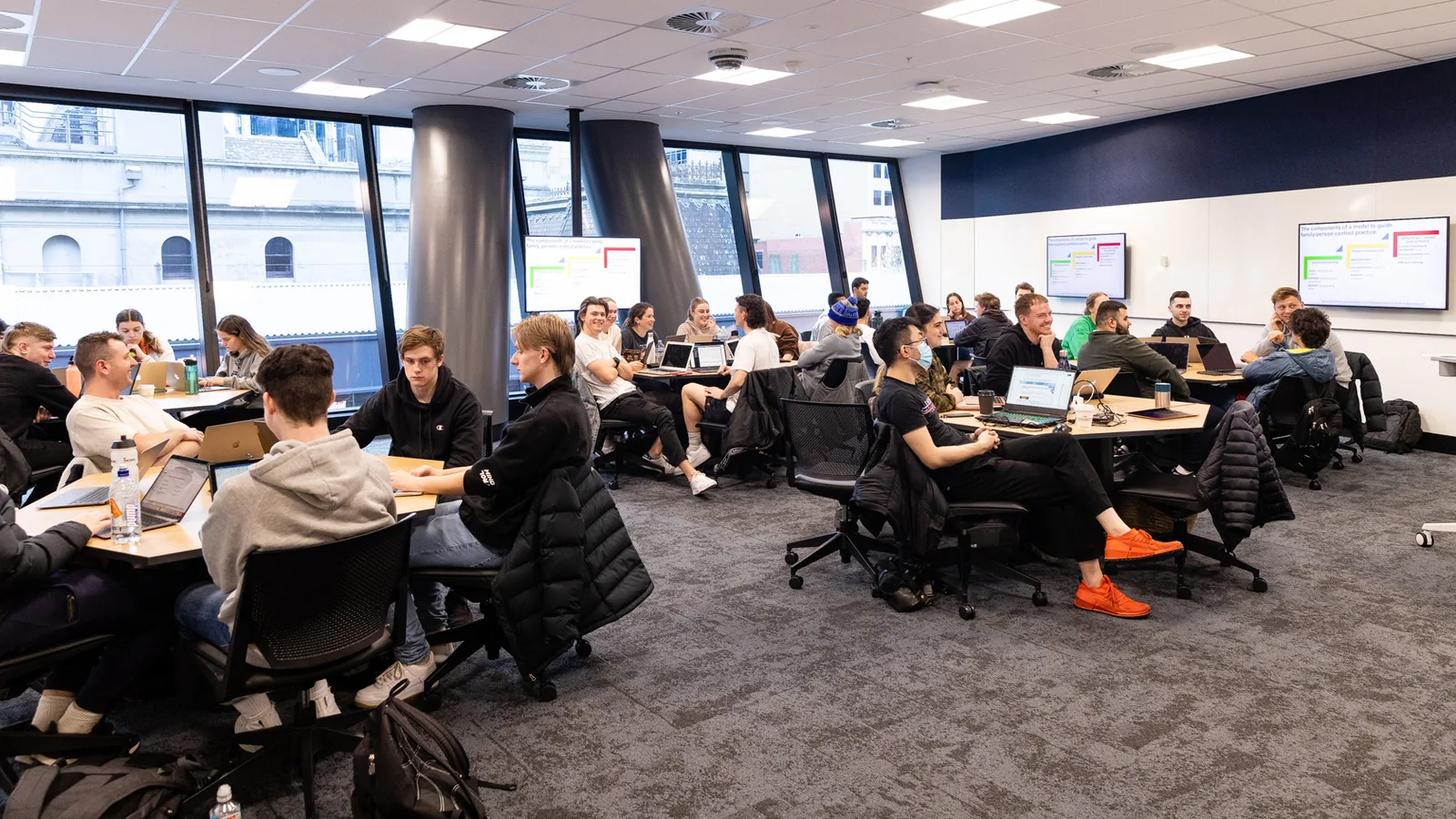
The classroom environment is highly collaborative and mirrors a professional workplace rather than a traditional lecture hall. As a student, the day-to-day life involves solving real-world financial problems and participating in simulations that replicate the high-energy atmosphere of a trading floor or corporate bank. The academic expectations are centered on practical application; students are often found analyzing current market trends or using industry-standard software to model financial risks. This hands-on style builds a close-knit community where peers work together on projects, reflecting the team-oriented nature of the global finance industry.
Specialized Skills and Career Readiness
This course specifically targets the technical and ethical skills needed to excel in modern financial markets. Students study the inner workings of banking operations, international finance, and the regulation of financial technologies. By the time they graduate, they are prepared to navigate complex dilemmas in contemporary banking, such as managing social and environmental risks within investment portfolios. The program’s strong links to the Melbourne financial district ensure that the curriculum remains relevant to current employer needs.
Pathways to the Profession
Graduates are uniquely equipped for diverse roles within the financial services sector, including lending officers, credit risk managers, or wealth management advisors. The degree provides a solid platform for further specialized study, such as a Master of Applied Finance or professional certifications like the CFA. Because the program emphasizes professional skills like communication and ethical practice, students leave with the confidence to enter high-stakes environments in stockbroking, insurance, or corporate financial planning.
Entry Requirements
Review the academic qualifications, grades, and additional criteria needed for admission to this program.

SPM
Minimum 5 credits including Mathematics (C) & English (C)


STPM
Minimum CGPA 3.00 including Mathematics T (C)


DIPLOMA
Minimum CGPA 3.00 including Mathematics T (C)


A-LEVEL
Minimum CGPA 3.00 including Mathematics T (C)


O-LEVEL
Minimum CGPA 3.00 including Mathematics T (C)
ADDITIONAL REQUIREMENTS
- MUET Band 3 or above
- IELTS Overall 6.0 or above
- Has at least one industry level certification in Engineering
Entry Requirement
About this School




Other Courses from This University
Explore all diploma, degree, and postgraduate programs available at this institution.
Courses You Might Be Interested
Explore similar diploma, degree, and postgraduate programs that you matches your interest.