


Bachelor of Engineering (Honours)(Civil Engineering)

Course Qualification
Degree

Study Period
4 Years

Study Mode
Full Time

Intakes
July, October, March

Estimate Fee
RM442,165
Course Overview
Foundations of Infrastructure Design
Students begin their journey by exploring the fundamental principles that keep our world standing. The Bachelor of Engineering (Honours) at the Sydney City Campus initially covers a broad range of engineering domains, allowing you to understand how civil projects interact with electrical and mechanical systems. You will spend your first year getting to know different facets of the field before focusing specifically on civil engineering. This stage involves deep dives into structural design, geotechnical analysis, and water engineering, where you learn to calculate the invisible forces acting on buildings, bridges, and roads.
Practical Problem Solving and Projects
Being a student in this course means moving beyond textbooks to solve real-world problems. You will spend time in specialized workshops and computer labs using professional tools like Autodesk Revit and Building Information Modelling (BIM) software to create digital replicas of infrastructure. Much of the learning is collaborative; you might find yourself working with peers to design a sustainable water supply scheme or testing the strength of materials under different environmental conditions. These projects reflect the daily tasks of a working engineer, emphasizing safety, functionality, and environmental protection.
The Student Environment and Professional Preparation
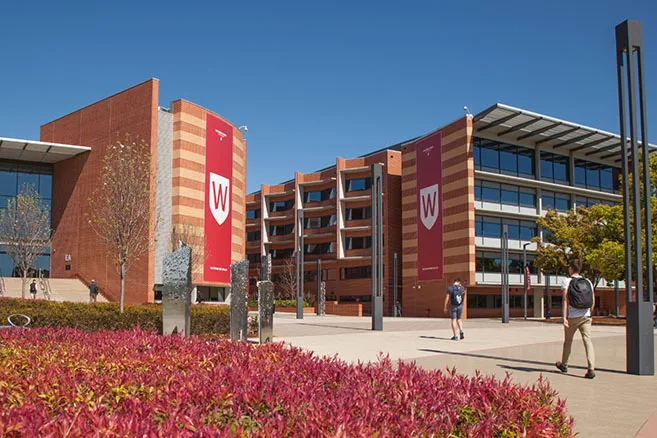
Life at the Sydney City Campus places you in the heart of a major metropolitan hub, surrounded by the very infrastructure you are studying. The learning environment is focused on "job readiness," which is highlighted by a mandatory 300 to 450-hour industrial placement. This allows you to step out of the classroom and into a professional engineering firm or government agency to apply your skills. You will experience the transition from a student to a professional as you navigate site visits, manage project timelines, and consult with experienced engineers on large-scale urban development tasks.
Career Paths and Future Impact
This course is designed to meet the professional accreditation requirements of Engineers Australia, ensuring your degree is recognized both locally and internationally. Graduates often find themselves managing major infrastructure projects, working as structural consultants, or acting as policy advisors for government environmental agencies. Whether you are interested in designing the next generation of airports or improving water resources in developing regions, the program provides the technical foundation and problem-solving mindset needed to build a more resilient future
Entry Requirements
Review the academic qualifications, grades, and additional criteria needed for admission to this program.

SPM
Minimum 5 credits including Mathematics (C) & English (C)


STPM
Minimum CGPA 3.00 including Mathematics T (C)


DIPLOMA
Minimum CGPA 3.00 including Mathematics T (C)


A-LEVEL
Minimum CGPA 3.00 including Mathematics T (C)


O-LEVEL
Minimum CGPA 3.00 including Mathematics T (C)
ADDITIONAL REQUIREMENTS
- MUET Band 3 or above
- IELTS Overall 6.0 or above
- Has at least one industry level certification in Engineering
Entry Requirement
About this School










Other Courses from This University
Explore all diploma, degree, and postgraduate programs available at this institution.
Courses You Might Be Interested
Explore similar diploma, degree, and postgraduate programs that you matches your interest.