
Murdoch University
 Perth, Western Australia, Australia
 Local University

Total Courses Offered
41 Courses

Intakes
Jan, Feb, May, Jul, Aug

Campus Count
1 Campus

 +61893606000
 study@murdoch.edu.au

School Overview


About This University
Introduction and Historical Legacy
Murdoch University stands as Western Australia's second university and one of Australia's most innovative and socially progressive higher education institutions. Established under an Act of the Western Australian Parliament in 1973 and formally constituted on July 25, 1973, the university was inaugurated on September 17, 1974—a date deliberately chosen to commemorate the 100th anniversary of the birth of Sir Walter Murdoch, the distinguished Australian academic, essayist, and philosopher after whom the institution is named. The Governor-General of Australia, Sir John Kerr, presided over the inauguration ceremony, which included the ceremonial placement of a survey mark at the center of Bush Court, made from granite sourced from Rosehearty, Scotland—Sir Walter Murdoch's birthplace.
Sir Walter Murdoch (1874-1970) was the Founding Professor of English and former Chancellor of the University of Western Australia, renowned for his advocacy of intellectual freedom, accessible education, and open inquiry. His philosophical commitment to making education available to all, regardless of background, profoundly influenced the ethos of the university bearing his name. This legacy manifests in Murdoch's pioneering approach to admissions, student support, and educational philosophy.
The university welcomed its first students in February 1974—18 postgraduate research students who commenced their studies before the official inauguration. The first undergraduate cohort arrived in 1975, with 510 students initially enrolled (expanding to 714 by year's end). From its inception, Murdoch distinguished itself as the first university in Australia to introduce a flexible admissions system, evaluating prospective students based on demonstrated potential, maturity, and life experience rather than solely on traditional school-leaving examination results. This revolutionary approach, initially controversial, eventually influenced admissions policies across Australian tertiary education, with other universities adopting more holistic perspectives on student eligibility.
The university's six founding Schools established in 1974-1975 focused on disciplines that remain institutional strengths today: Biological and Environmental Sciences, Education, Human Communication, Mathematical and Physical Sciences, Social Sciences, and Veterinary Science. The Veterinary School, which officially opened in 1978, holds particular significance as the first in Australia to integrate a practicing veterinary teaching hospital with university facilities, and remains Western Australia's only veterinary school.
Campus Locations and Unique Environment
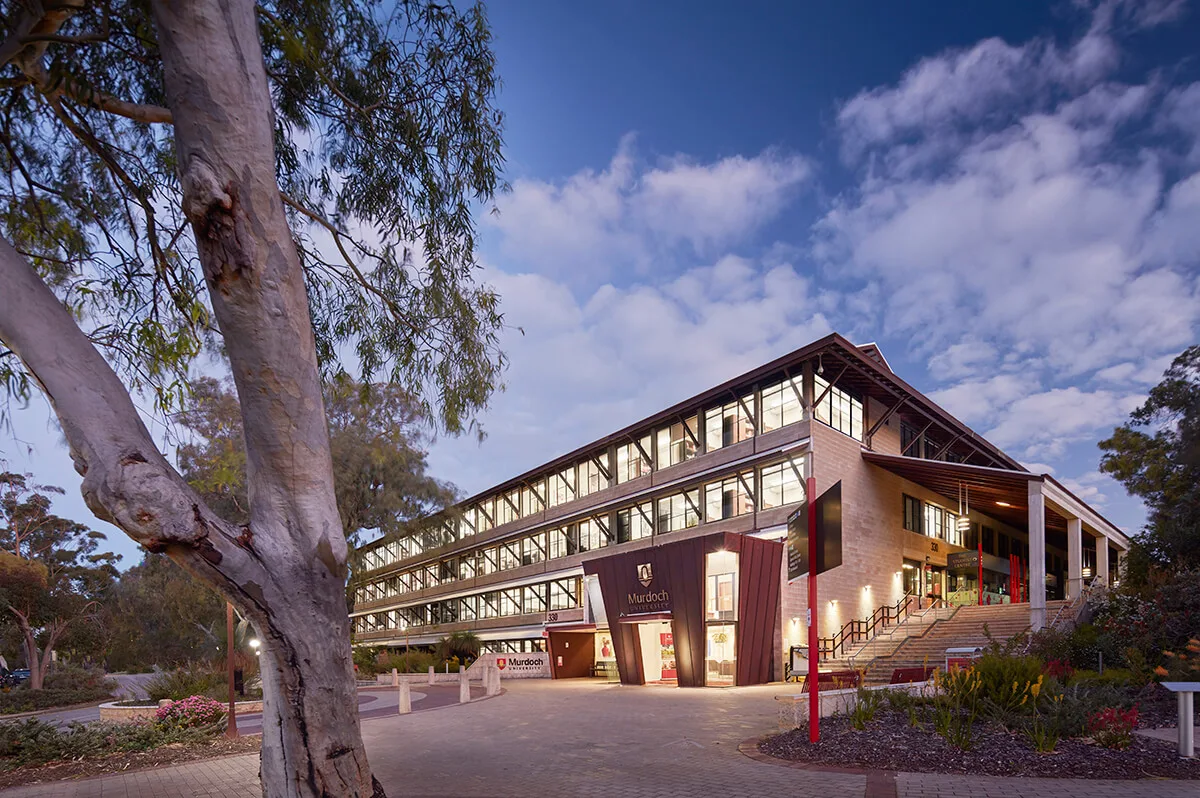
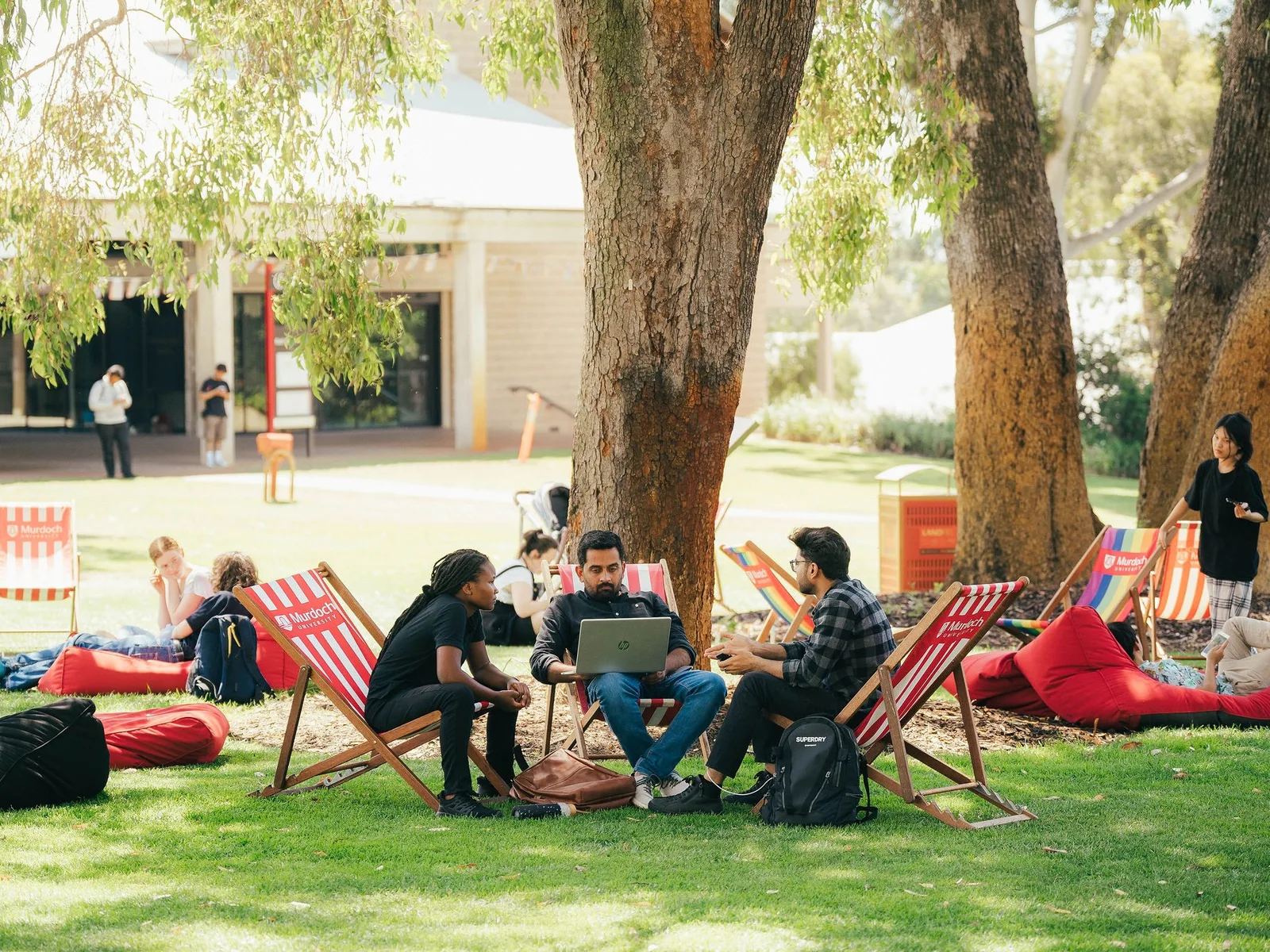
Murdoch University's flagship Perth campus occupies a distinctive 227-hectare site in the suburb of Murdoch, approximately 15 kilometers south of Perth's central business district. The campus represents one of the largest urban university campuses in Australia and holds the unique distinction of being the only city-based Australian university featuring a working farm on campus. This heritage farm supports agricultural research and education while maintaining connections to the university's rural and environmental science strengths.
The campus environment showcases remarkable biodiversity, encompassing protected wetlands and extensive native bushland that serve as habitat for numerous native and endangered species. This bush campus setting creates an unusual juxtaposition—a major metropolitan university nestled within natural ecosystems where students can encounter native wildlife including black cockatoos, bandicoots, and various reptile and bird species during their daily campus activities. The university has established on Whadjuk and Binjareb Noongar lands, which have served as places of learning for thousands of years, a tradition Murdoch proudly continues while acknowledging and respecting First Nations custodianship.
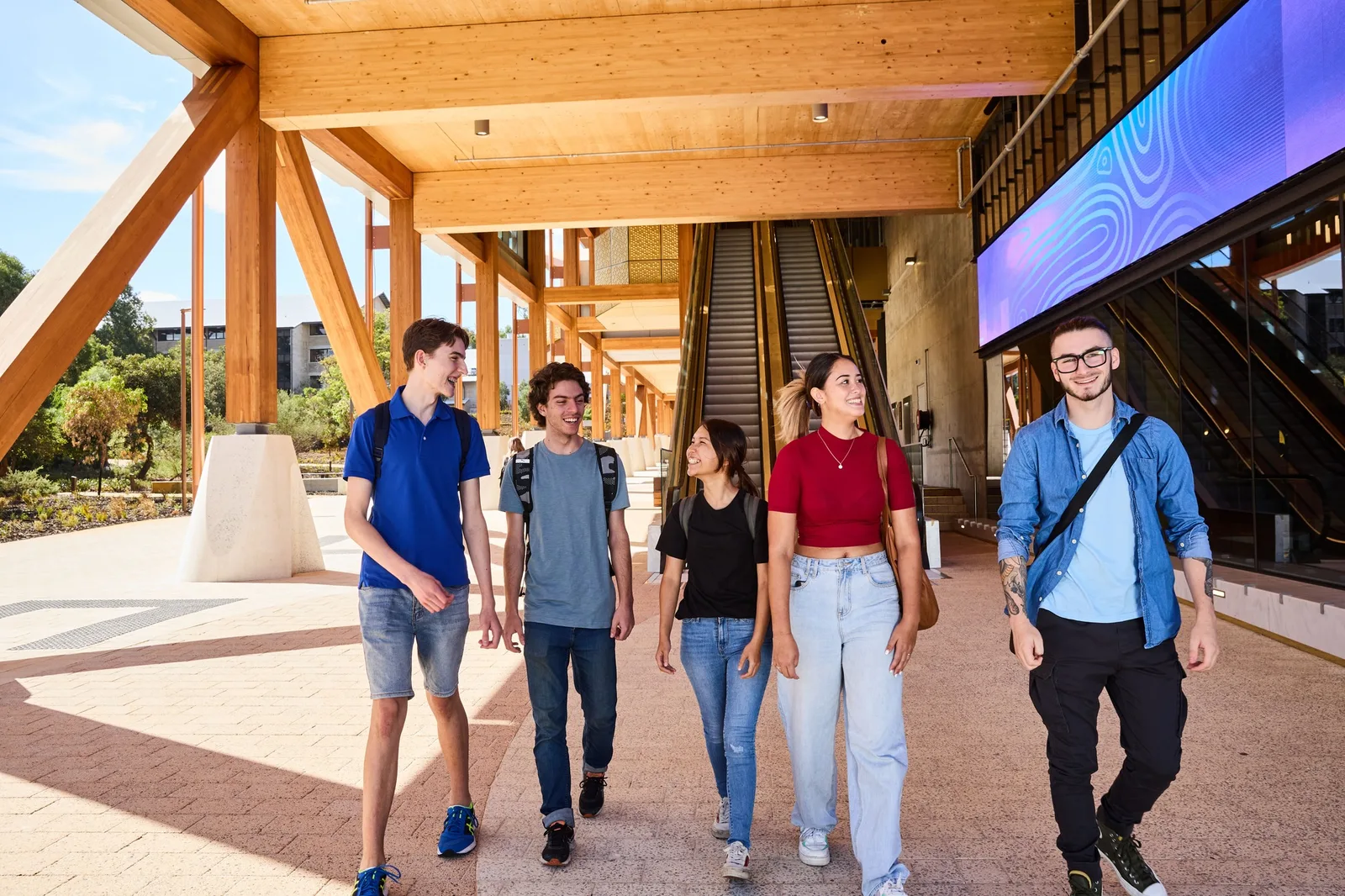
At the heart of the campus stands Boola Katitjin, Murdoch's award-winning academic building recognized as the World's Best Academic Building by the World Architecture Festival. Opened in recent years, this state-of-the-art facility exemplifies sustainable design principles, innovative use of space, and integration of digital technology. The building name, meaning "many learning together" in Noongar language, reflects the university's commitment to First Nations recognition and collaborative learning. Boola Katitjin features technology-rich laboratories, flexible learning spaces adaptable to various teaching methodologies, collaborative work areas, sustainable design elements including solar panels and water recycling systems, and social spaces where students, teachers, and industry partners converge.
The iconic Broadwalk pedestrian and cycling pathway traverses the campus center, connecting all precincts to Murdoch Train Station and creating a vibrant corridor for student movement and interaction. Murdoch Station, on the Perth-Mandurah railway line, sits adjacent to campus, providing convenient public transport access with frequent trains connecting to Perth CBD and southern suburbs. Multiple bus routes serve the campus via stops on South Street, Murdoch Drive, and Discovery Way, while extensive cycling infrastructure including bike paths, secure storage facilities, and end-of-trip amenities encourage sustainable transportation.
Beyond the Perth campus, Murdoch operates additional Australian locations including the Mandurah campus (64 kilometers south of Perth), opened in 2004, which houses nursing degrees taught in state-of-the-art clinical simulation suites, and the Rockingham campus (38 kilometers south of Perth), home to enabling programs and the pro bono law clinic providing free legal services to the community. Internationally, Murdoch maintains campuses in Singapore (partnership with Kaplan, serving students across Southeast Asia) and Dubai (established 2008 in Dubai Knowledge Park, expanded 2020 with new facilities).
Academic Structure and Programs
Murdoch University delivers education through five colleges, each housing specialized schools that provide focused expertise and resources:
The College of Arts, Business, Law and Education encompasses Schools of Arts, Business and Governance, Education, and Law. This college offers comprehensive programs from undergraduate through doctoral levels in humanities disciplines, creative arts, media and communication, business administration, commerce, accounting, marketing, management, education (including teacher preparation), law (undergraduate and Juris Doctor), and criminology.
The College of Science, Health, Engineering and Education houses Schools of Allied Health, Engineering and Energy, Environmental and Conservation Sciences, Health Professions, Molecular and Life Sciences, and Nursing and Midwifery. Programs span nursing (offered at Perth, Mandurah, and Dubai campuses), biomedical sciences, psychology, exercise science and sports science, public health, environmental science and conservation biology, engineering disciplines (civil, instrumentation and control, renewable energy), information technology and cybersecurity, data science, and agricultural science.
The School of Veterinary Medicine operates as a standalone entity reflecting its specialized nature and extensive facilities. Murdoch's integrated Bachelor of Science/Doctor of Veterinary Medicine program spans six years and includes extensive clinical training at the on-campus Animal Hospital, which operates 24/7 providing emergency and specialty veterinary care to the public while serving as a teaching facility. The program is accredited by the Australasian Veterinary Boards Council and the Royal College of Veterinary Surgeons (UK), ensuring graduates can practice internationally.
Across these colleges, Murdoch offers over 200 undergraduate and postgraduate courses spanning 17 study areas. The university emphasizes practical, industry-aligned education with programs integrating work-integrated learning, professional placements, industry projects, and hands-on experiences from early stages. Murdoch maintains an impressive network of over 2,000 industry partnerships providing students with meaningful work experience and employment connections.
Teaching Philosophy and Student Support
Murdoch University's teaching philosophy emphasizes active learning, critical thinking, practical application, and development of transferable skills. The institution maintains relatively small class sizes compared to larger metropolitan universities, enabling more personalized attention and interactive learning environments. Faculty members combine academic expertise with industry experience, bringing real-world perspectives into teaching.
The university achieved five-star ratings for overall satisfaction, inclusiveness, and employability in the QS Stars Assessment 2024, alongside five-star ratings from the Good Universities Guide 2024 for social equity, student-to-teacher ratio, teaching quality, student support, and employability skills. These consistent high ratings across multiple assessment frameworks reflect sustained institutional commitment to student experience and outcomes.
Comprehensive support services ensure student success across academic, personal, and professional dimensions. Student Central, located in Boola Katitjin (Building 360, Level 3), provides a one-stop service hub for administrative support including enrollment assistance, fee inquiries, student ID cards, parking permits, timetable help, and general course information. Operating Monday to Friday from 8:30am to 4:30pm, Student Central serves as the first point of contact for many student queries.
MyMurdoch Advice locations across campus offer academic support, study skills guidance, course planning assistance, and wellbeing advice. Student Success Advisors provide personalized consultations addressing study challenges, time management, academic writing, research skills, and transition support for first-year students. Peer Academic Coaches, consisting of high-achieving senior students, offer relatable mentoring and study assistance.
The Murdoch University Medical Service (Building 418) provides confidential medical care, treatment, referrals, and health promotion activities. International students with OSHC (Overseas Student Health Cover) or NIB insurance receive direct billing at Medicare-equivalent rates, typically eliminating out-of-pocket expenses. The Murdoch University Counselling Service (Building 440) offers free, confidential support for enrolled students, helping build resilience and address personal, emotional, or psychological challenges affecting academic progress.
Kulbardi Aboriginal Centre serves as the hub for Aboriginal and Torres Strait Islander student support, cultural connection, and community building. Kulbardi (meaning "learning" in Noongar language) has operated since 1985 (initially as the Aboriginal Education Unit) to increase Indigenous participation in higher education and provide comprehensive academic, cultural, and social support. The Centre delivers the award-winning K-Track enabling program, offering alternative pathways into university for Aboriginal and Torres Strait Islander students.
The Geoffrey Bolton Library, named after the distinguished historian and former Deputy Vice-Chancellor, serves as the heart of learning, teaching, and research. The facility provides extensive print and digital collections, specialized databases, 24-hour Learning Common with computers and study spaces, quiet study areas, group collaboration rooms, printing and scanning services, research support from specialist librarians, and workshops on information literacy and research skills.
Launchpad, Murdoch's careers and employability service, develops students' career readiness through workshops, individual consultations, resume and interview preparation, networking events, internship and vacation program opportunities, employer presentations and career fairs, and ongoing support for alumni navigating career transitions.
Research Excellence and Innovation
Murdoch University achieved recognition as a research-intensive institution and member of Innovative Research Universities Australia (IRU Australia). In the Excellence in Research Australia (ERA) assessment conducted by the Australian Research Council, Murdoch achieved world-class standard or above ratings in 81% of assessed research disciplines, demonstrating breadth and quality across diverse fields.
The university has established strategic research priorities aligned with global challenges and regional strengths, focusing on sustainability and environmental conservation, health and wellbeing, food security and agricultural innovation, energy transition and renewable technologies, social justice and policy development, First Nations knowledge and advancement, and technology and innovation for societal benefit.
Specialized research centers and institutes drive focused investigation and industry collaboration. The Australian National Phenome Centre, opened in 2017, positions Western Australia as an international hub for metabolic phenotyping research with applications in personalized medicine and disease prevention. The Ngangk Yira Institute for Change (established 2021) drives research supporting healthy Aboriginal families and communities through culturally appropriate methodologies and Aboriginal leadership in research design and implementation.
The Harry Butler Institute conducts environmental science research continuing the legacy of the renowned Western Australian naturalist and conservationist. The Asia Research Centre, established in 1989 and awarded over $6 million in Australian Research Council funding in 1990, maintains Murdoch's strong research connections across Asia-Pacific regions. The Bayer Pilot Plant, a nationally recognized facility, provides engineering students with practical experience using industrial-scale equipment for process engineering applications.
Campus Facilities and Student Life
Beyond academic buildings, Murdoch's campus offers extensive facilities supporting learning, wellbeing, and community. The Nexus Theatre, opened in 1996, provides a 175-seat venue for performances, seminars, conferences, and cultural events, operated jointly by professional staff and students and available to both the university and wider community. The Media Arts Centre houses professional-grade facilities including sound stages, television studios, sound-mixing and radio studios, digital post-production facilities, and video editing suites, enabling hands-on learning in media production.
Clinical simulation suites at Perth and Mandurah campuses feature fully equipped clinical teaching wards, treatment areas, and high-fidelity simulation facilities replicating hospital environments for nursing, allied health, and medical science education. The on-campus Veterinary Animal Hospital operates as both a teaching facility and public veterinary clinic, providing 24/7 emergency and specialist veterinary services.
Sports and recreation facilities include gymnasiums, fitness centers, sports courts and fields, and programs coordinated through the Murdoch Guild. The Murdoch Guild, an independent student organization established alongside the university, provides advocacy, support services, social activities, clubs and societies, food bank and welfare assistance, event programming, and independent representation for student interests. Over 100 clubs and societies span cultural groups, academic disciplines, special interests, sports, creative pursuits, and social causes.
Accommodation options include the Murdoch University Village, a 3-hectare residential complex redeveloped in 2009 providing housing for over 800 residents in self-contained apartments and shared facilities. The Village emphasizes sustainable living and community building through shared study spaces, sporting facilities, entertainment areas, and social programs.
The Worship Centre (Building 515) provides a multifaith space for religious observance, spiritual reflection, and cultural practices, with support for diverse faith communities including Islamic prayer spaces, Christian services, and interfaith dialogue initiatives.
Student dining options range from cafés and food courts to the student-run Degrees Brewery Restaurant and Sir Walter's Tavern, alongside various food trucks via the Pop-Up Refectory. The School Locker provides textbooks, stationery, and essential supplies.
Admission Pathways and Accessibility
Murdoch's commitment to accessible education extends beyond flexible admissions to comprehensive alternative pathway programs. The university offers multiple entry routes for students who don't meet standard requirements or who have been away from formal education.
OnTrack, a 14-week intensive program, enables students without traditional qualifications to gain university entry through successful program completion. FlexiTrack provides free online preparation qualifying students for direct application to most undergraduate degrees with indicative ATARs of 70.00, available in intensive 10-week, full-time 20-week, or part-time 12-month formats. OnTrack Sprint, a 4-week intensive program, assists students who narrowly missed ATAR requirements (scoring 60.00-69.95 within previous 18 months).
The Murdoch RISE (Regional, Indigenous, Socio-Economic) initiative automatically adds 10 selection rank points (up to maximum of 90) for eligible students from regional areas, low socio-economic backgrounds, or Aboriginal and Torres Strait Islander communities, improving access for historically underrepresented groups.
Portfolio Admission Pathways assess creative work for entry into Bachelor of Arts, Communication, and Creative Media programs, recognizing artistic merit and potential beyond academic transcripts.
Scholarships and Financial Support
Murdoch University awards over $2.5 million annually in scholarships supporting students across all levels. Unlike loans, scholarships don't require repayment, enabling students to focus on studies rather than financial stress. Categories include academic merit scholarships recognizing outstanding achievement, equity scholarships supporting students facing disadvantage, sports scholarships for elite athletes, research scholarships for doctoral and masters candidates, discipline-specific scholarships from schools and industry partners, and external scholarships from government and private organizations.
International students may access the Australia Awards Scholarships (Australian government initiative supporting students from participating countries) and various country-specific financial aid programs. Murdoch participates in international loan programs from Canada, Denmark, Germany, and other nations.
Beyond scholarships, the university provides emergency loans for students facing unexpected financial hardship, textbook vouchers for eligible domestic students purchasing essential course materials, and welfare support through the Murdoch Guild including an on-campus food bank providing non-perishable groceries to students experiencing financial difficulty.
Global Engagement and Rankings
Murdoch's international campuses extend Australian education globally while creating opportunities for student mobility and cross-cultural learning. The Singapore campus, operated in partnership with Kaplan, has grown to become the second-largest foreign university presence in Singapore, offering undergraduate and postgraduate programs in business, IT, communications, and other disciplines. The Dubai campus, expanded significantly in 2020 with new facilities designed by Woods Bagot, serves students across the Middle East and beyond.
International rankings consistently recognize Murdoch's quality and impact. The university ranks within the top 500 globally across major ranking systems and achieves top 100 placement among young universities (under 50 years old) in multiple assessments. QS subject rankings highlight particular strengths, including top global performance in Agriculture and Forestry, Environmental Sciences, and Veterinary Science, alongside strong showings in Education, Law, Psychology, and other fields.
The university serves over 25,000 students from more than 90 countries, creating a genuinely multicultural learning environment. Over 70,000 alumni worldwide maintain connections through alumni networks, mentoring programs, professional development opportunities, and regular events.
Strategic Direction: Ngala Kwop Biddi
Murdoch University's current strategy, "Ngala kwop biddi: Building a brighter future, together" (with the Noongar phrase meaning "we move forward together"), reaffirms institutional purpose through three strategic themes:
Sustainability: Murdoch commits to achieving carbon neutrality across operations, zero waste to landfill, and net-zero transport by 2030, while embedding sustainability throughout curriculum and research.
Equity, Diversity and Inclusion: The university prioritizes creating inclusive environments where everyone can realize their potential, with particular focus on supporting underrepresented groups in accessing and succeeding in higher education.
First Nations: Murdoch strengthens engagement with Aboriginal and Torres Strait Islander communities, increases Indigenous participation and success, embeds Indigenous knowledges in teaching and research, and supports Indigenous-led research priorities.
AWARDS AND RANKINGS







Course Offered
Explore all diploma, degree, and postgraduate programs available at this institution.








Featured Schools
Discover more schools and courses available.