

You've probably seen the videos. Someone wakes up at 5 AM, journals, does a cold shower, and finishes more before breakfast than you do all day. The message is clear: if you're not up before the sun, you're falling behind.
Here's the thing, though. That advice ignores something you can't out-discipline: your circadian rhythm.
Your body runs on its own clock
Deep in your brain sits a cluster of cells called the suprachiasmatic nucleus — basically your body's master timekeeper. It controls when you feel sleepy, when you feel alert, when your body temperature rises and falls, and even when your memory works best. This internal clock runs on a roughly 24-hour cycle, and it doesn't care what your timetable says.
What's interesting is that this clock isn't set the same for everyone. Scientists call these individual differences chronotypes. Some people — the classic "morning larks" — genuinely feel sharpest in the early hours. Others, the "night owls," don't hit their stride until the afternoon or evening. Most of us sit somewhere in between.
And no, being a night owl isn't laziness. Chronotype is heavily influenced by your genes. Teenagers and young adults also naturally shift later — during your secondary school and university years, your body clock is biologically delayed compared to both children and older adults. That 8 AM lecture feeling impossible? There's a real physiological reason for it.
The blue light problem
Your circadian rhythm doesn't run in isolation. It takes cues from your environment, and the biggest cue by far is light.
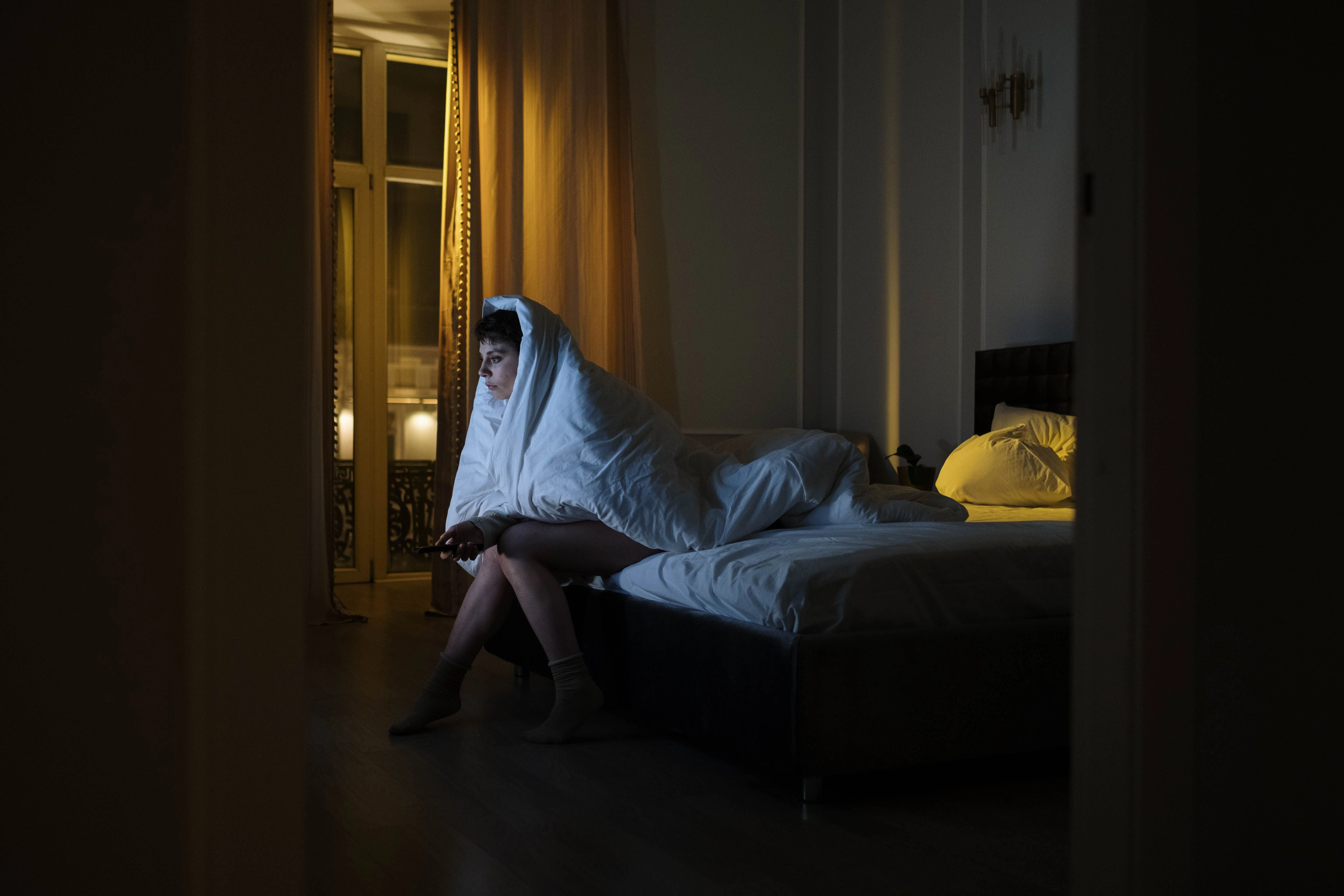
When light hits your eyes, it signals your brain to suppress melatonin — the hormone that makes you sleepy. That's helpful in the morning. It's a problem at midnight, when the light is coming from your phone.
Blue light, the kind screens give off in large amounts, is especially good at convincing your brain it's still daytime. So when you scroll through videos at 1 AM, you're not just losing sleep time. You're actively pushing your body clock later, which makes waking up tomorrow harder, which makes you more tired, which makes you reach for your phone again the next night. It's a loop many students know too well.
You don't need to quit screens entirely. Dimming your phone in the evening, switching to night mode, or simply putting it down 30 to 60 minutes before bed gives your melatonin a chance to do its job.
Study with your biology, not against it
Here's where this gets practical. Instead of forcing yourself into someone else's routine, try mapping your day around your own energy patterns.
Start by noticing when you naturally feel most alert. For a week, jot down your energy levels at different times of day — morning, midday, late afternoon, night. A pattern will show up quickly.
Then apply a simple rule: save your hardest work for your peak hours. If you're sharpest at 10 PM, that's when you tackle calculus, essay drafting, or exam revision — not when you sort your notes or reply to group chat messages. Low-energy hours are for low-effort tasks.
A few more ways to work with your clock:
Timetables are fixed, but your free hours aren't. You can't move your 8 AM class, but you can decide whether your evening goes to deep revision or admin tasks based on when your brain actually shows up.
Protect your sleep window. Whatever your chronotype, consistency matters more than the exact hours. Sleeping 1 AM to 9 AM every day beats bouncing between midnight and 3 AM.
Use morning light strategically. If you're a night owl stuck with early classes, getting sunlight soon after waking helps nudge your clock earlier over time.
The takeaway
The 5 AM club works brilliantly — for people whose bodies are built for it. For everyone else, it's a recipe for exhaustion dressed up as discipline.
Real productivity isn't about copying someone else's schedule. It's about understanding your own rhythm and putting your best hours toward your most important work. Your body already knows when it works best. The smart move is to listen.


LEAVE A COMMENT
Join the conversation
No comments yet. Be the first to comment!